

Last Updated: November 17, 2026
Quick Summary
Caffeine free hydration for athletes means replacing the fluid and electrolytes lost through sweat without adding a stimulant. It suits evening trainers, athletes with sensitive stomachs, and anyone tired of the jitter-and-crash cycle. Choose a drink with a clear sodium figure, zero caffeine and zero sugar.
- Most adults should aim for around 1.5 to 2 litres of fluid a day as a baseline, before exercise, heat or sweat.
- Every kilogram lost during a session is roughly a litre of fluid you should replace afterwards.
- For sessions over 60-90 minutes, aim for 150-250ml of electrolyte drink every 15-20 minutes.
- In the 1-2 hours before training, aim for roughly 400-600ml of fluid.
- HYCO sachets provide 250mg of sodium with no sugar, calories or caffeine.
Table of Contents
- Why Caffeine Free Hydration Suits Athletes Better
- How Much Water Should Adults Drink Per Day
- Signs of Dehydration in Athletes to Watch For
- Electrolyte Formats: Powders, Tablets and Ready-Made Drinks
- How to Read a Caffeine Free Electrolyte Label
- Choosing the Best Caffeine Free Electrolyte Powder
- A Hydration Plan for Before, During and After Exercise
- Risks of Overhydration and Excessive Electrolyte Intake
- Next Steps for Your Hydration Routine
- Frequently Asked Questions
Why Caffeine Free Hydration Suits Athletes Better
Caffeine free hydration for athletes means replacing the fluid and electrolytes lost through sweat without adding a stimulant to the mix. For anyone training in the evening, managing a sensitive stomach, or simply tired of the jitter-and-crash cycle, that distinction matters more than most sports drinks labels admit.
HYCO sachets are built around exactly that idea: 250mg of sodium, balanced minerals and vitamins C, D3, B5, B6 and B12, with no sugar, no calories and no caffeine. If you have ever wondered whether that sodium is something to worry about, read why salt isn't bad for you.
What Caffeine Does to Fluid Balance and Recovery
Caffeine is a mild diuretic, and for most people the effect is modest, but it is real. Keep it away from training and your hydration strategy becomes simpler: fluid in, fluid replaced, no stimulant side effects to manage.
How Much Water Should Adults Drink Per Day
Most adults should aim for around 1.5 to 2 litres of fluid a day as a baseline, according to NHS hydration guidance, before accounting for exercise, heat or sweat. That figure covers water, tea, and other drinks, but it is a starting point, not a personal prescription.
Athletes need more, and the honest answer is that your own sweat rate is the only number that matters. Weigh yourself before and after a session: every kilogram lost is roughly a litre of fluid you should replace. But sweat rate is only half the picture.
Adjusting Fluid Intake for Training Load and Sweat Rate
A hard session in warm conditions can push losses well beyond two litres an hour for heavy sweaters. A light 30-minute jog might cost you 500ml. Match your intake to the work: longer and hotter means more fluid and more sodium, shorter and cooler means less.
To make this practical, build a simple personal profile rather than chasing a universal formula:
- Body size: larger athletes generally sweat more and need more fluid; smaller athletes less. Use your pre- and post-session weight change as the anchor, not a generic litre target.
- Heat and humidity: a session that costs you 500ml in cool conditions can cost 1.5 litres in the heat. Increase fluid and sodium when the temperature rises or when you are training indoors without airflow.
- Sweat saltiness: if your skin or kit shows white salt streaks after a session, or your sweat stings your eyes, you are likely a salty sweater and will benefit from a higher-sodium drink rather than plain water alone.
- Session intensity and duration: easy sessions under an hour are usually fine with water; hard or long sessions, especially over 60-90 minutes, are where electrolytes earn their place.
A common pattern is to start with the baseline figure, add your measured sweat loss for the session, and then adjust sodium based on how salty you sweat and how you feel afterwards.
Watch out: do not use thirst alone to set your target during long or hot sessions, thirst lags behind actual losses, so by the time you feel thirsty you may already be down on fluid and sodium.
Signs of Dehydration in Athletes to Watch For
The clearest early signs of dehydration in athletes are thirst, dark yellow urine, a dry mouth and a creeping sense of fatigue that does not match the effort.
Watch for headaches, dizziness on standing, and a raised heart rate at a pace that normally feels easy. A simple daily check: pale straw-coloured urine is a good sign, dark amber means drink more.
Electrolyte Formats: Powders, Tablets and Ready-Made Drinks
Electrolyte products come in three main formats, and the right one depends on how you train.
- Sachets and powders: mix to your preferred strength, easy to portion, ideal for a gym bag or kitchen counter
- Tablets: drop into a bottle, compact, but you cannot adjust the ratio of sodium to water
- Ready-made drinks: grab-and-go, useful on race day, but bulky and often contain sugar
If you want the quick answers on how much water per serving and what is in the formula, our HYCO FAQs cover the details.
The three main electrolyte formats differ in how you use them and what you can adjust.
| Format | Best for | Key difference |
|---|---|---|
| Sachets and powders | Gym bag or kitchen counter | Mix to preferred strength, easy to portion |
| Tablets | Compact bottle use | Cannot adjust sodium-to-water ratio |
| Ready-made drinks | Race day | Grab-and-go but bulky, often contain sugar |
How to Read a Caffeine Free Electrolyte Label
Reading a caffeine free electrolyte label comes down to four checks: the sodium content per serving, the caffeine figure, the sugar content, and the vitamins and minerals listed. Sodium is one of the key electrolytes lost in sweat, so it deserves a close look.
Look for a clear milligram figure for sodium per serving, a caffeine line that reads zero, and a sugar line that reads zero if you want a clean formula.
If you want to see exactly what a clean formula looks like, read what is in HYCO and why: 250mg of sodium, balanced electrolytes and minerals, five vitamins, no sugar and no caffeine.
Choosing the Best Caffeine Free Electrolyte Powder
The best caffeine free electrolyte powder is the one that delivers a meaningful dose of sodium, dissolves cleanly, tastes light enough to drink daily, and fits your budget per serving.
The HYCO range is a good option, and here is why it earns a place in your routine:
- Sodium that counts: 250mg per sachet, the electrolyte you actually lose in sweat
- Five vitamins: C, D3, B5, B6 and B12, supporting immune function and muscle health
- No sugar, no calories, no caffeine: sweetened with stevia and erythritol, so it fits any time of day
- Flexible strength: one sachet into 500ml to a litre of still water
New to the range? The HYCO Taster Pack gives you ten Mixed Berry and ten Tropical sachets for £27.00, so you can find your flavour before committing to a pouch.
Best for: daily hydration and training days without stimulants. Skip if: you want a caffeinated pre-workout boost, which this deliberately is not.
A Hydration Plan for Before, During and After Exercise
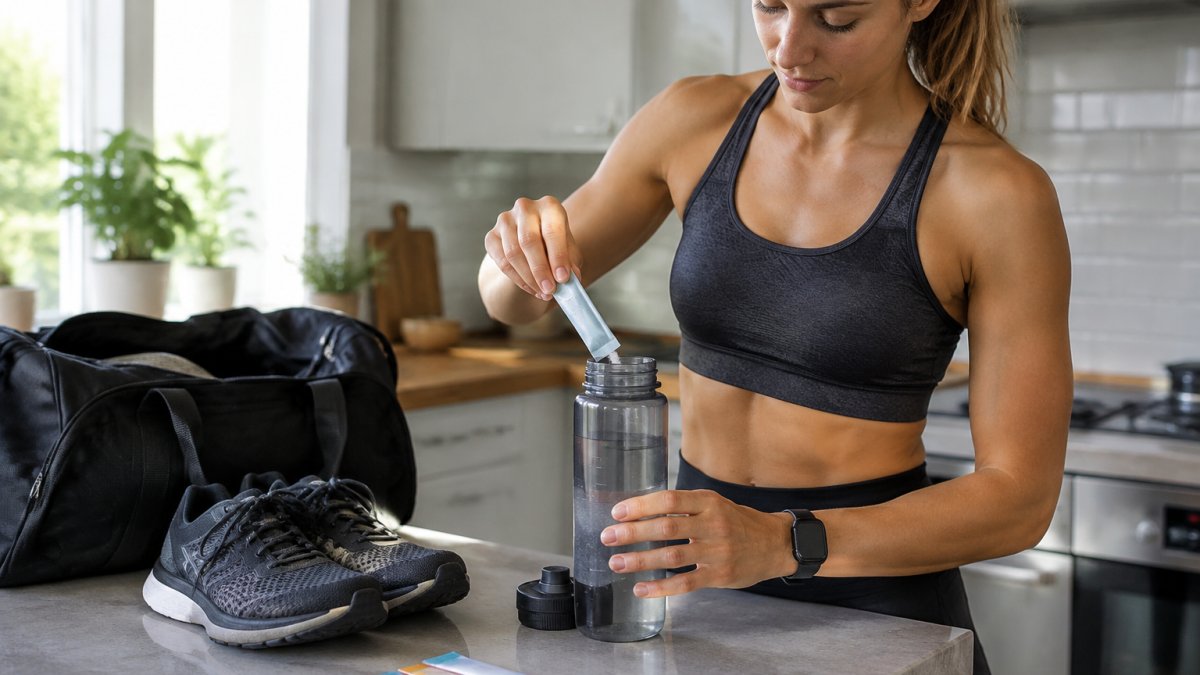
A practical hydration plan runs in three stages: pre-load, mid-session, and post-exercise recovery. Start sipping 1 to 2 hours before you train, keep a bottle within reach during the session, and replace what you lost afterwards. The detail that matters is matching the plan to the session, not following a fixed script every day.
Before: pre-load without overdrinking
In the 1-2 hours before training, aim for roughly 400-600ml of fluid. If the session will be long, hot, or hard, mix in an electrolyte sachet so the sodium is on board before you start sweating. If it is a short, easy session in cool conditions, water is enough. The goal is to start hydrated, not to force fluid, drinking far beyond thirst before exercise mainly makes you need the toilet.
During: match intake to duration and intensity
For sessions under about 60 minutes at easy to moderate intensity, water is usually sufficient. For sessions over 60-90 minutes, or any session in heat where you are sweating heavily, use an electrolyte drink and aim for 150-250ml every 15-20 minutes, more in heat. Sipping little and often is better tolerated than large gulps. If you are a salty sweater or the session is especially long, choose a higher-sodium option rather than adding more volume.
After: replace what you lost
Weigh yourself before and after the session. For every kilogram lost, aim to replace roughly 500ml of fluid over the next few hours, with sodium to help retention. A drink with 250mg of sodium per serving, like the HYCO sachets, is a straightforward way to combine fluid and electrolyte replacement without sugar or caffeine. If you are deciding between formats for your routine, our comparison of HYCO pouches versus cans breaks down which fits training and everyday use.
A simple decision rule
- Under 60 minutes, cool conditions, easy effort: water is enough.
- 60-90 minutes, moderate sweat: water plus a light electrolyte drink if you sweat heavily or train in heat.
- Over 90 minutes, hot conditions, or salty sweater: electrolyte drink with meaningful sodium throughout, and replace losses afterwards.
- Evening training or caffeine sensitivity: keep the whole plan caffeine free so sleep and recovery are not disrupted.
Watch out: do not drink to a fixed schedule regardless of thirst during long events, as the plan should flex with conditions rather than override your body's signals.
Risks of Overhydration and Excessive Electrolyte Intake
Drinking too much is a genuine risk, not just a theoretical one, and endurance events commonly advise against drinking to a fixed schedule regardless of thirst.
The practical guardrails are simple. Do not force fluid beyond thirst during long events, spread sodium intake across the day rather than dumping it all in one drink, and check with your GP before loading up on electrolytes if you have kidney or heart conditions or take medication that affects fluid balance.
Next Steps for Your Hydration Routine
Getting caffeine free hydration right comes down to knowing your sweat rate, reading labels properly, and choosing a formula you will actually drink every day.
HYCO is built for exactly that routine: 250mg of sodium per sachet, five vitamins including C, D3 and B12, and no sugar, calories or caffeine, lab-tested and made in the UK. Start with the Taster Pack to find your flavour, then settle into a pouch that matches how often you train.
Get started with HYCO and build a hydration ritual that supports your training without the stimulants.
Frequently Asked Questions
Do athletes need caffeine for hydration?
No. Caffeine is not required for fluid balance, and it can work against it. Caffeine has a mild diuretic effect, which means you lose more fluid through urine, and for athletes who train in the evening it can interfere with sleep and recovery. Caffeine free hydration delivers the electrolytes and fluid your body needs without the jittery feeling or the crash that follows. A drink with sodium, potassium and magnesium can help replace what you lose in sweat, and you can use it at any time of day.
What are the benefits of caffeine-free electrolyte drinks?
The main benefits are steady hydration without stimulant side effects. Caffeine-free options can be drunk in the evening without affecting sleep, they suit people who are sensitive to caffeine, and they avoid the energy spike and crash that some athletes find disruptive before competition. For hydration purposes, what matters most is sodium content and fluid volume, not caffeine. A formula with around 250mg of sodium per serving, plus potassium and magnesium, covers the key electrolytes lost in sweat.
How much water should athletes drink per day?
General guidance for adults is around 1.5 to 2 litres of fluid a day from drinks, but athletes need more. A practical starting point is to check urine colour (pale straw is the target) and to weigh yourself before and after training. A loss of 1kg body weight represents roughly 1 litre of fluid, Hot weather, altitude and long endurance sessions all increase the requirement, so treat any figure as a baseline rather than a fixed target.
Are electrolyte powders better than water for intense training?
Water is fine for sessions under about 60 minutes at low to moderate intensity. For longer or harder training, especially in the heat, electrolytes make a real difference because sweat contains sodium, potassium, magnesium and chloride. A powder or sachet with sodium can be a sensible choice when you sweat heavily. Look for a product with a clear sodium figure per serving and no added sugar if you want to keep calories low.
